Why a SWPPP template is not a SWPPP, and what the permit actually asks for
Templates are how most plans start and how most findings happen. Here is the contents list the federal permit mandates, section by section, and the parts a template structurally cannot fill in.
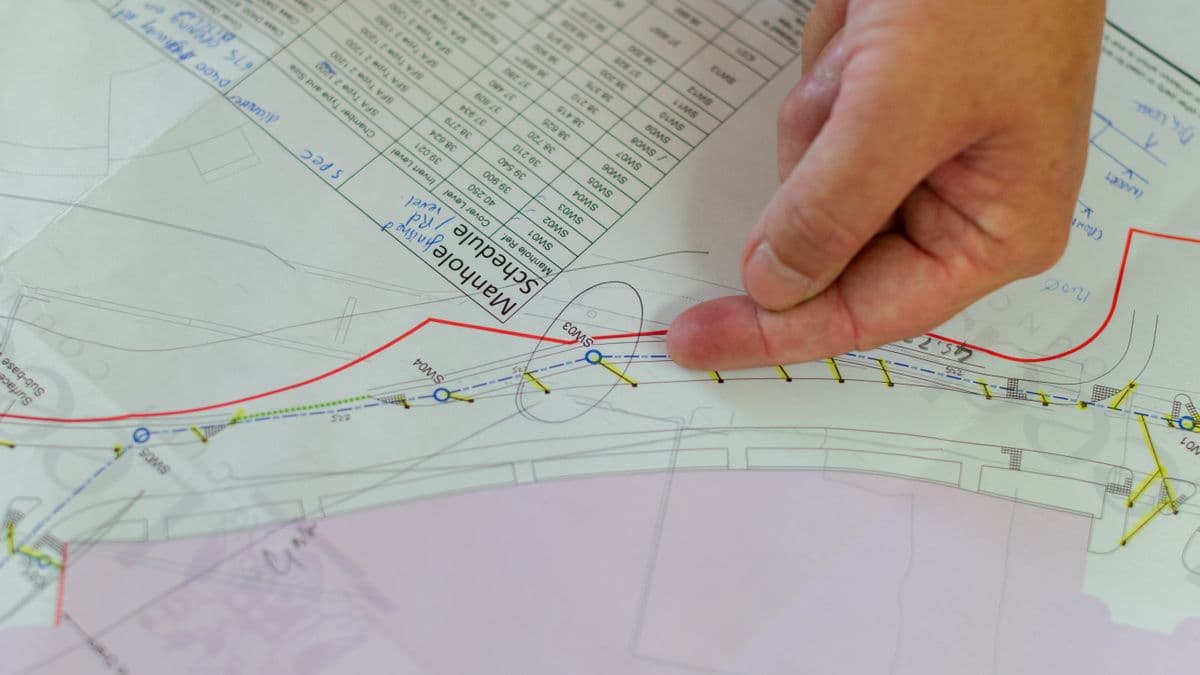
Searching for a template is a reasonable instinct. You have been told you need a document, you have never written one, and somewhere out there is a file that shows you the shape. The problem is not that templates are bad. It is that the permit requires the document to be site specific, and the parts a template hands you are precisely the parts that are the same everywhere and therefore the parts nobody is inspecting.
What the permit requires the plan to contain
Under EPA's 2022 Construction General Permit, the plan has to be developed before you submit your Notice of Intent, and Part 7 sets out what it carries. In outline:
- All site operators. A list of every other operator engaged in construction at the site and the areas each controls.
- The stormwater team. The personnel by name and position, their individual responsibilities, and how to contact them.
- The nature of the construction activities. The size of the property, the total area expected to be disturbed, the maximum disturbed at any one time, a projected schedule for each phase, and an inventory of pollutant generating activities with the pollutants associated with each.
- A site map. Property boundaries, where activities occur, discharge points, receiving waters, controls, buffers and drainage patterns.
- The controls you will use, where they go and how they are maintained.
- The inspection schedule you have chosen and why it applies to you.
- The corrective action record, kept as the project runs rather than assembled at the end.
Our methodology and state pages publish this list section by section, each with the permit part it came from, so you can see the requirement rather than take our word for the summary.
The four things a template cannot give you
Look at that list and you can see where the seam is. A template can carry the headings, the boilerplate and the standard control descriptions. It cannot carry:
- Your site map and discharge points. Where your water goes is a fact about your site, and it is the first thing an inspector checks against what is on the ground.
- The maximum area disturbed at any one time. This number decides your stabilisation deadline. Above five acres the deadline is seven calendar days; at or below five it is 14. A template leaves it blank, and a blank filled in casually changes a real obligation.
- Your receiving water answer. Whether you discharge to a sediment or nutrient impaired water, or a Tier 2, 2.5 or 3 water, decides your inspection frequency and can force the seven day stabilisation deadline regardless of acreage. No template knows this.
- The schedule of your phases. The permit asks for projected dates for commencement, cessation and stabilisation in each portion of the site. That is a construction schedule, not a document.
A generic plan filled in loosely is the most common finding at an inspection, and it is worse than no plan, because it looks like compliance from the outside and fails at exactly the moment it is tested.
The bigger site gets the shorter deadline
This one is worth isolating because it runs against intuition and it is written into a table people skim. Stabilisation must be initiated immediately, meaning no later than the end of the next business day after earth disturbing activities cease in an area. Completion is within 14 calendar days where five acres or less are disturbed at one time, and within seven calendar days above five acres.
So growing past five acres shortens your deadline rather than relaxing it. And discharging to a sensitive water forces seven days regardless of acreage, overriding the table entirely.
A better order of work
- Determine which permit governs your site. It is the federal Construction General Permit only where EPA is the permitting authority; most states issue their own, and a state permit can be stricter.
- Settle who may prepare the plan before anybody writes anything. In a credential gated state, a document prepared by the wrong person is a redraft at best.
- Work out which requirements attach to your site: your acreage, your receiving water, your climate. These are the numbers the document is built around.
- Then, and only then, reach for a shape to write it into. By that point you are filling a document with facts rather than filling gaps with guesses.
In a state that requires a credentialed preparer, a document generated by any tool including ours is a draft for that person to review, amend and sign. Ours says so on its face. Check your state before you assume otherwise.
Start with the determination, not the document. Free, and it runs in your browser.
Screen a site freeThis guide is general compliance guidance, not legal or engineering advice, and it is not a permit. To see what applies to your own site, use the free screening, or see how the same engine works from your own code or an AI agent.
More guides
Put this into practice on your own site
Screen a site free in your browser, or read the permit that governs your state.