Does a Texas SWPPP Need a PE Stamp? What TCEQ Actually Requires
TCEQ's construction general permit names no SWP3 preparer credential. Here is what TXR150000 actually says, and where a PE genuinely belongs on a Texas project.
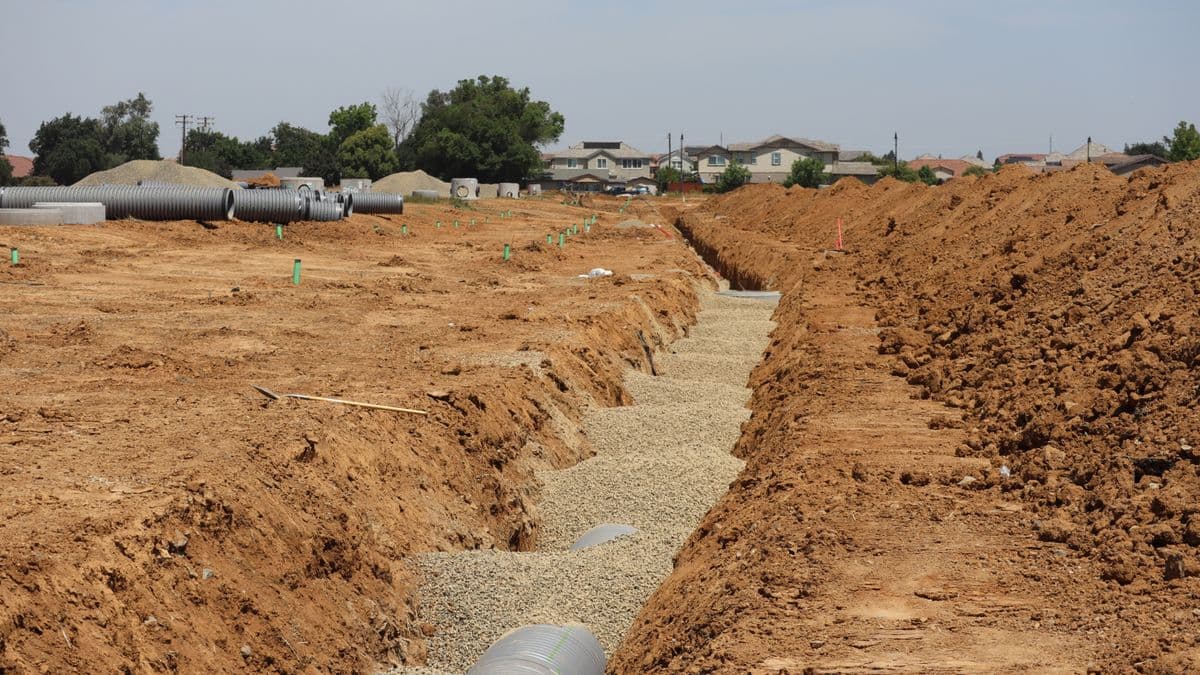
Ask around a Texas job site who is allowed to write the SWP3 and you will hear, with real confidence, that a professional engineer has to stamp it. The belief is common enough that operators turn down qualified staff and pay for a PE review they never needed. It is also not what the permit says. TCEQ's 2023 Construction General Permit names no preparer credential for the SWP3 at all. What follows is where that belief comes from, what TXR150000 actually requires, and the one situation where a PE genuinely is the right call on a Texas site.
What TXR150000 actually says
Texas runs stormwater permitting through the Texas Commission on Environmental Quality (TCEQ), under the TPDES Construction General Permit, TXR150000 (the 2023 CGP, effective 5 March 2023). In Texas the plan itself goes by a state-specific name: the SWP3, short for Stormwater Pollution Prevention Plan, doing the same job the SWPPP does everywhere else.
On preparer credentials, the permit is close to silent. It requires only that the SWP3 exist and be timed correctly relative to authorization: "The SWP3 must be prepared prior to obtaining authorization under this general permit." That is a sequencing rule, not a qualifications rule. Nowhere in TXR150000 does TCEQ name a required credential, licence, or certification for the person who drafts the plan.
Where the permit does use qualification language, it is aimed at a different job. Requirements around who conducts site inspections and who signs off on the annual comprehensive site compliance evaluation are about competence to observe and assess conditions in the field over the life of the project, not about who was allowed to author the document at the outset. Conflating the two is the single most common misreading of this permit, and it is an easy one to make, because most other compliance obligations in a CGP genuinely do bundle preparation and oversight under one credential.
So where does the PE-stamp belief come from
Two things get run together. The first is Texas's licensing regime for engineering generally: the Texas Engineering Practice Act, Occupations Code Chapter 1001, administered by the Texas Board of Professional Engineers and Land Surveyors (TBPELS, pels.texas.gov). That statute is broad. It defines the practice of engineering expansively and, subject to a set of specific exemptions (for public employees working from a licensed engineer's plans, certain small public works, agricultural soil and water conservation work, and a handful of others), reserves that practice to licensed engineers. The second is the CGP itself, a narrower document that governs one specific deliverable.
People reasonably assume the broad statute must reach into the narrow permit and force a PE stamp onto the SWP3 by default. It is a defensible-sounding inference, and it is wrong as a blanket rule, because it skips a step: whether any given piece of SWP3 content actually constitutes the practice of engineering under Chapter 1001 is a fact-specific question about what that content involves, not something TCEQ's permit resolves for you one way or the other. The permit does not gate preparation on a credential. Whether the practice act separately reaches a particular scope of work is a different, narrower question, answered by what the work actually is, not by the SWP3 label attached to the document that contains it.
Two different questions, worth keeping apart
The confusion collapses down to two questions that sound like one:
- Does the SWP3, administratively, require a credentialed preparer to sign it before TCEQ will accept it? No. Nothing in TXR150000 says that.
- Does the underlying engineering on this site require a licensed PE? Sometimes, yes, and that answer has nothing to do with the SWP3 specifically.
The second question shows up constantly in practice, just not for the reason people think. A site with a detention pond, a complex outfall, or drainage work that a municipality's own design standards route through a licensed engineer will have a PE on the project regardless of what TXR150000 requires for the SWP3. Local drainage ordinances, subdivision regulations, and civil design standards are where that gate usually lives, layered on top of state law, not inside the stormwater permit. So a PE is frequently on a Texas project and frequently touches the SWP3's technical content, such as sizing a control structure or certifying a drainage calculation. That is real engineering work triggering the practice act on its own terms. It is a different thing from TCEQ conditioning SWP3 acceptance on a stamp, which it does not do.
| Question | What people assume | What TXR150000 actually requires | Where a PE actually enters |
|---|---|---|---|
| Who may prepare the SWP3 | Must be stamped by a Texas PE | No preparer credential named; permit only sets timing ("prepared prior to obtaining authorization") | Not from the CGP itself |
| Who may conduct site inspections | Same person who wrote the plan, no credential needed | Qualification language applies here, to inspection and the annual compliance evaluation | Not typically a PE-specific requirement |
| Detention, outfall, or drainage design | Covered by the SWPPP process | Not addressed by the CGP; governed separately | Genuinely PE territory under local drainage ordinances and Chapter 1001 |
| General engineering judgement calls in the SWP3 | Never needs a PE since TCEQ doesn't ask for one | Silent; the practice act still applies to actual engineering content wherever it appears | Case by case, based on what the specific work involves |
What this means for a Texas project
- Do not add a PE stamp requirement to your SWP3 workflow because you assumed TCEQ wanted one. It costs time and money you did not need to spend, and it can make you slower than competitors who read the permit correctly.
- Do keep a PE involved wherever the site's actual engineering, drainage design, or structural stormwater controls call for one. That obligation exists independently of the SWP3 and does not go away because the permit is silent on plan preparers.
- Check your local ordinance in addition to the state permit. Texas cities and counties can and do layer their own drainage review requirements on top of TXR150000, and that local layer is a more likely source of a real PE gate than the state CGP itself.
- If you are unsure whether a specific piece of content in your plan crosses into the practice of engineering, that is a question for TBPELS guidance or your own counsel, not something a generated document can resolve for you.
Basinwise's jurisdiction registry lists Texas credential.required as false, sourced directly to the 2023 CGP text above, at verified confidence. We do not infer a PE requirement that the permit itself does not state.
None of this is a reason to skip due diligence on your own site. It is a reason to separate two questions that are easy to blur: what TCEQ's permit requires for the SWP3, and what your site's engineering actually needs regardless of the permit. Get the credential answer for Texas and the rest of your determination in one pass, and read the wider pattern of who may prepare a plan in each state alongside it.
Run your Texas site through the determination engine and see the credential answer alongside your permit obligations.
Check your Texas siteFor the state-by-state credential register, see the Texas preparer credential page and the Texas stormwater permit overview. For the broader pattern across all fifty states, including where a state does gate preparation, see the QSD guide and the sibling post on who may prepare a SWPPP.
FAQ
Does a PE need to stamp a SWPPP in Texas?
Not under TXR150000 itself. TCEQ's construction general permit sets no preparer credential for the SWP3, only that it exist before authorization. A PE may still be involved because of the site's actual engineering work, which is a separate matter from the permit's own requirements.
What does TCEQ actually require for the SWP3?
That it be prepared prior to obtaining authorization under the general permit, and that it meet the CGP's content requirements. The permit does not name who is qualified to write it.
If TCEQ does not require a PE, why do so many Texas SWPPPs have one anyway?
Usually because the project's drainage or detention design needed a licensed engineer for reasons unrelated to the SWP3, such as a local drainage ordinance, and that same engineer's work then feeds into the plan. It is common, but it is not the CGP creating the requirement.
Does the Texas Engineering Practice Act ever apply to SWPPP work?
It can, to the extent specific content in the plan constitutes the practice of engineering as Chapter 1001 defines it. That is a fact-specific question about the work itself, not a blanket rule that every SWP3 needs a stamp, and TCEQ's permit does not resolve it either way.
Is Texas's SWP3 the same thing as a SWPPP?
Yes. SWP3 is simply Texas's name, used throughout TXR150000, for the same Stormwater Pollution Prevention Plan required under construction general permits nationally.
This guide is general compliance guidance, not legal or engineering advice, and it is not a permit. To see what applies to your own site, use the free screening, or see how the same engine works from your own code or an AI agent.
More guides
Put this into practice on your own site
Screen a site free in your browser, or read the permit that governs your state.